
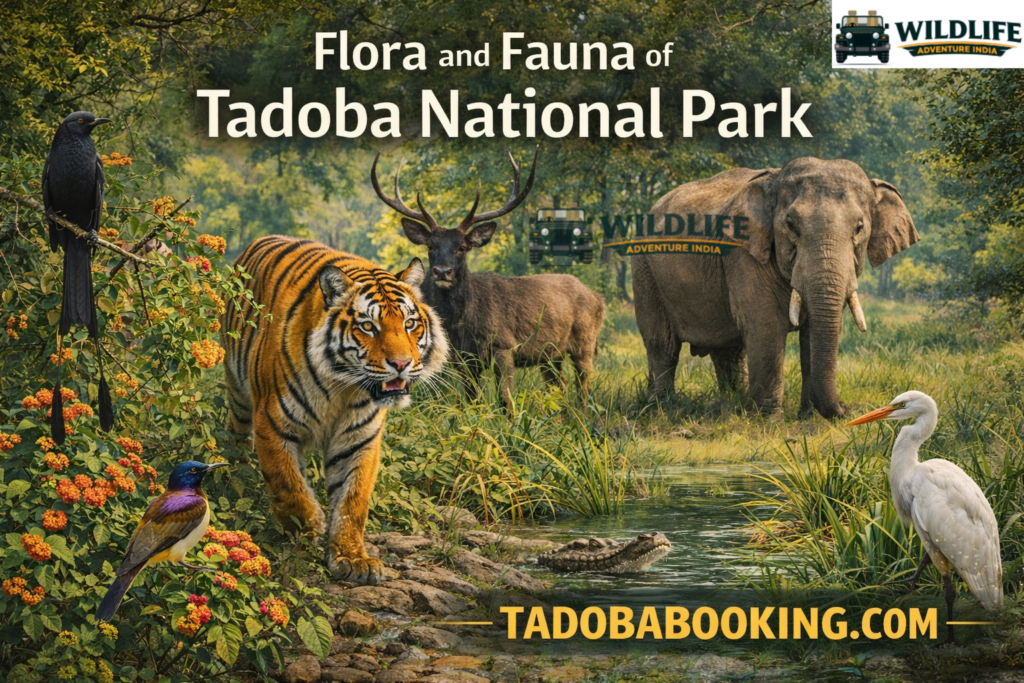
Hidden deep in the Chandrapur district of Maharashtra, Tadoba Andhari Tiger Reserve stands as one of India’s oldest, wildest, and most rewarding wildlife destinations. Popularly called the “Jewel of Vidarbha”, Tadoba is renowned for its thriving tiger population, dramatic dry deciduous forests, and a rich ecological web that supports hundreds of plant and animal species.
For travellers planning a jungle safari, wildlife photographers seeking iconic shots, bird watchers scanning treetops, or nature lovers curious about central India’s ecosystems, understanding the flora and fauna of Tadoba National Park, Maharashtra, reveals why this reserve is considered among the best tiger reserves in India.
This detailed guide explores the trees and vegetation in Tadoba forest, the animals found in Tadoba Tiger Reserve, birdlife, reptiles, safari habitats, and the overall biodiversity of Tadoba Andhari Tiger Reserve.
Overview of Tadoba National Park
- Established: 1955; included under Project Tiger in 1995
- Location: Chandrapur district, Maharashtra (Vidarbha region)
- Total Area: ~1,727 sq. km (core + buffer)
- Forest Type: Tropical dry deciduous forest ecosystem in Maharashtra
- Main Water Bodies: Tadoba Lake, Andhari River, Kolsa Lake, Irai Backwaters, Seasonal Streams
The reserve is divided into core and buffer zones with multiple entry gates. The terrain is a mosaic of teak forests, bamboo brakes, open meadows, rocky patches, hills, and lakes. These varied landscapes form rich Tadoba safari zones and wildlife habitats that support predators and prey in a delicate balance.
Landscape, Climate, and Habitat Diversity
Tadoba experiences three prominent seasons:
- Summer (March–June): Hot, dry, sparse foliage, peak wildlife visibility
- Monsoon (July–September): Heavy rains, lush greenery, park mostly closed
- Winter (October–February): Pleasant climate, ideal for bird watching and safaris
The seasonal rhythm directly shapes the trees and vegetation in the Tadoba forest and influences animal movement, breeding, and sightings.
Flora – Trees and Vegetation in Tadoba Forest
The vegetation in Tadoba represents a classic dry deciduous forest ecosystem in Maharashtra. Most trees shed leaves in peak summer to conserve moisture, allowing sunlight to reach the forest floor and encouraging grass growth that feeds herbivores.
Tadoba National Park Flora Species Names (Dominant Trees)
- Teak (Tectona grandis) – Primary canopy species across the park
- Bamboo (Dendrocalamus strictus) – Provides thick cover for predators
- Mahua (Madhuca longifolia) – Food source for wildlife and tribal communities
- Ain (Terminalia tomentosa)
- Tendu (Diospyros melanoxylon)
- Arjun (Terminalia arjuna) – Near riverbanks and lakes
- Jamun (Syzygium cumini)
- Salai (Boswellia serrata)
Grasses, Shrubs, and Forest Floor
Grassy meadows rich in perennial grasses support sambar, chital, nilgai, and gaur. Shrubs and climbers form dense undergrowth that predators use for stalking prey.
Seasonal Transformation of Vegetation
- Summer: Dry, golden forest; best wildlife visibility
- Monsoon: Explosive greenery and plant regeneration
- Winter: Mixed foliage and comfortable safari conditions
Fauna – Animals Found in Tadoba Tiger Reserve
The animals found in Tadoba Tiger Reserve represent a rich tapestry of wildlife, ranging from apex predators to small mammals, forming a balanced and well-structured food chain. This diversity makes Tadoba one of the most ecologically significant protected areas in India and a hotspot for wildlife enthusiasts.
Mammals: Tadoba Andhari Tiger Reserve Wildlife Species List
Bengal Tiger (Panthera tigris tigris)
The Bengal tiger is the undisputed star of Tadoba. The reserve is renowned for its relatively high tiger density and consistent sightings, making it one of the best places in India for spotting these majestic big cats. Several famous tigers, including Maya, Matkasur, Choti Tara, and Sonam, have been extensively documented by researchers and wildlife photographers. Tigers in Tadoba are apex predators, playing a crucial role in maintaining the ecological balance by controlling herbivore populations.
- Behaviour and Habitat: Tigers are mostly solitary, patrolling territories that span several square kilometres. They are most active during early mornings and late afternoons, especially around waterholes and grasslands.
Leopard (Panthera pardus fusca)
Leopards are stealthy and elusive, often inhabiting rocky outcrops, dense forests, and park buffer zones. They are opportunistic hunters, feeding on deer, monkeys, and occasionally smaller predators. Despite being less frequently sighted than tigers, leopards are integral to Tadoba’s predator-prey dynamics.
- Behaviour and Habitat: Leopards are highly adaptable, capable of climbing trees to store their prey away from scavengers. They are mostly nocturnal, which makes sightings rare but special.
Sloth Bear (Melursus ursinus)
Sloth bears are a common but intriguing resident of Tadoba. They are most often seen in bamboo groves and areas with abundant termite mounds, feeding on insects, honey, and fruit. Their unique feeding behaviour and shaggy appearance make them a favourite among visitors.
- Behaviour and Habitat: Sloth bears are nocturnal or crepuscular. They play an important ecological role by controlling insect populations and aiding seed dispersal through their frugivorous diet.
Indian Gaur (Bos gaurus)
The Indian gaur, commonly referred to as the Indian bison, holds the title of the world’s largest wild cattle species. They graze in large herds across open meadows and forest clearings, forming a key prey base for tigers and leopards. Observing a herd of gaurs, with their massive stature and social hierarchy, is a remarkable experience for any wildlife enthusiast.
- Behaviour and Habitat: Gaurs are diurnal and prefer grasslands near forests. Their grazing helps maintain grassland ecosystems, indirectly supporting smaller herbivores.
Dhole (Indian Wild Dog) (Cuon alpinus)
Dholes are social, pack-hunting carnivores that occasionally appear on safari routes. They hunt medium-sized ungulates like sambar, chital, and young gaurs. Though shy, their cooperative hunting strategies make them highly efficient predators.
- Behaviour and Habitat: Dholes are diurnal, unlike many other predators. Their packs communicate through whistles and calls, which can sometimes be heard during early morning safaris.
Other Mammals
Tadoba supports a wide array of other mammals that enrich the ecosystem and form an essential prey base for large predators:
- Sambar Deer (Rusa unicolour) – Large deer, a primary food source for tigers
- Chital / Spotted Deer (Axis axis) – Abundant herbivore with a high reproductive rate
- Nilgai / Blue Bull (Boselaphus tragocamelus) – Large antelope often seen in grasslands
- Barking Deer (Muntiacus muntjak) – Small, elusive deer that inhabit dense forests
- Wild Boar (Sus scrofa) – Opportunistic omnivore, crucial in the food chain
- Jackal (Canis aureus) – Scavenger and occasional predator, maintains ecological balance
- Civets (Palm Civet and Indian Civet) – Nocturnal mammals that aid in seed dispersal
- Langur and Rhesus Macaque – Common primates, prey for large predators, and important seed dispersers
Ecological Significance
The abundance of herbivores in Tadoba, including sambar, chital, nilgai, and gaur, supports the high density of apex predators like tigers and leopards. This healthy prey-predator balance ensures the long-term stability of the park’s ecosystem. Small mammals and omnivores like civets, jackals, and sloth bears add complexity to the food web, contributing to nutrient cycling, seed dispersal, and forest regeneration.
Tips for Observing Mammals in Tadoba
- Early Morning and Late Afternoon Safaris: Predators are most active during cooler parts of the day.
- Waterholes: Animals congregate here, especially in summer.
- Bamboo Groves and Grasslands: Ideal for spotting sloth bears, leopards, and herbivores.
- Patience and Silence: Many species, like leopards and civets, are elusive; observation requires careful tracking and minimal noise.
Bird Watching in Tadoba National Park
With over 200 bird species, birdwatching in Tadoba National Park is exceptional, especially near water bodies.
Common Birds
- Crested Serpent Eagle
- Changeable Hawk Eagle
- Asian Paradise Flycatcher
- Indian Pitta (monsoon)
- Peafowl
- Grey Hornbill
- Woodpeckers, Drongos, Kingfishers
- Owls and nightjars
Winter brings migratory waterfowl to Tadoba Lake and Irai backwaters.
Reptiles and Crocodiles in Tadoba Lake
The wetlands host important reptilian life.
- Mugger crocodile basking near Tadoba Lake
- Indian Rock Python
- Cobra, Russell’s Viper, Krait
- Monitor Lizard
- Frogs and toads in the monsoon
These reptiles and crocodiles in Tadoba Lake are crucial to the aquatic food chain.
Tadoba Safari Zones and Wildlife Habitats
Popular entry gates:
- Moharli – High tiger movement, Tadoba Lake zone
- Kolara – Scenic bamboo and meadows
- Navegaon – Birdlife and water bodies
- Zari – Dense forest, sloth bear sightings
- Pangdi – Buffer wildlife activity
Each offers a distinct Tadoba jungle safari wildlife experience.
Best Time to Visit Tadoba for Tiger Sightings
SeasonExperienceSummerIdeal Season for Tiger Sightings in Tadoba National ParkWinterBirdwatching and pleasant safarisMonsoonPark closed, ecological renewal.
Wildlife Photography in Tadoba Tiger Reserve
Tadoba’s unique landscape makes it a paradise for wildlife photographers. The combination of open deciduous forests, grasslands, bamboo thickets, and perennial waterholes provides ideal conditions to capture animals in their natural habitats. The park’s frequent tiger movements, along with other charismatic wildlife such as leopards, sloth bears, and Indian gaur, make every safari an opportunity for spectacular photography.
Lighting and Landscape:
- Early Morning Safaris: The misty forest backdrop, combined with low-angle sunlight filtering through teak and bamboo, creates magical scenes perfect for capturing wildlife in natural light.
- Summer Months: Dusty tracks, sunlit grasslands, and animal silhouettes at waterholes provide dramatic, cinematic photography opportunities.
- Monsoon Season: Though park access is limited, the forest turns lush green, ideal for capturing vibrant flora and birdlife.
Key Subjects for Photographers:
- Bengal tigers drinking or resting near waterholes
- Sloth bears forage among bamboo thickets
- Herds of Indian gaur grazing in open meadows
- Birds such as peafowls, hornbills, and migratory species near Tadoba Lake
- Reptiles like mugger crocodiles and monitor lizards basking in the sunlight
Professional and hobbyist photographers alike find Tadoba rewarding because of its open visibility, active wildlife, and scenic backdrops, making it one of India’s most photographed tiger reserves.
Biodiversity of Tadoba Andhari Tiger Reserve
The biodiversity of Tadoba Andhari Tiger Reserve is exceptional, encompassing a rich mix of flora and fauna. Several factors make Tadoba ecologically significant:
- Strong Predator–Prey Ratio: High populations of herbivores such as sambar, chital, nilgai, and Indian gaur sustain apex predators like tigers, leopards, and dholes, maintaining a healthy ecological balance.
- Dry Deciduous Forest Ecosystem: Teak-dominated forests with bamboo undergrowth and seasonal grasslands form the backbone of the park’s habitat.
- Mixed Habitats: Forests, meadows, bamboo thickets, wetlands, and waterholes support diverse species, from mammals to amphibians.
- Rich Avifauna and Reptile Diversity: Over 200 bird species and numerous reptiles, including mugger crocodiles, cobras, and monitor lizards, make the park a hotspot for ecologists and bird watchers.
- Sustainable Eco-Tourism Practices: Responsible tourism and regulated safari operations ensure minimal disturbance to wildlife, preserving the park’s natural balance (read more here).
Conservation and Role Under Project Tiger
Tadoba’s inclusion in Project Tiger has been instrumental in stabilising its tiger population and protecting its wider ecosystem. Conservation efforts include:
- Anti-Poaching Patrols: Regular monitoring and rapid response teams help prevent illegal hunting.
- Habitat Management: Controlled burning, waterhole maintenance, and reforestation maintain healthy habitats.
- Community Involvement: Local villages participate in ecotourism and conservation programmes, ensuring sustainable livelihoods while supporting wildlife protection.
- Research and Monitoring: Tigers and other species are monitored via camera traps, GPS tracking, and scientific surveys to inform management strategies.
These measures have contributed to Tadoba becoming one of India’s most successful tiger reserves, balancing ecological preservation with visitor engagement.
Tadoba is best known for its healthy population of Bengal tigers. It is one of the best places in India for tiger sightings in the wild. Besides tigers, the park is also home to leopards, sloth bears, wild dogs (dholes), gaurs, and many species of deer.
Tadoba has a dry deciduous forest ecosystem. The dominant trees include teak, bamboo, aain, bija, and tendu. During the summer, many trees shed their leaves, making wildlife easier to spot. The bamboo thickets and grasslands provide excellent cover and habitat for animals.
Visitors often spot spotted deer (chital), sambar deer, nilgai, barking deer, wild boar, and gaur (Indian bison). These herbivores form the primary prey base for predators like tigers and leopards.
Yes. Tadoba is known for sightings of sloth bears, which are rarely seen in many other parks. The park also hosts Indian wild dogs (dholes), leopards, jungle cats, civets, and marsh crocodiles near water bodies.
Conclusion
The flora and fauna of Tadoba National Park, Maharashtra, present a living, dynamic ecosystem where teak forests, bamboo thickets, open grasslands, and serene lakes support extraordinary wildlife. From the majestic Bengal tiger to the elusive sloth bear, the graceful Indian gaur, and hundreds of bird species, Tadoba offers unparalleled opportunities for exploration, study, and photography.
Whether you are:
- Studying the Tadoba Andhari Tiger Reserve wildlife species list,
- Exploring Tadoba National Park flora species names,
- Planning the best time to visit Tadoba for tiger sightings, or
- Capturing moments through wildlife photography in Tadoba Tiger Reserve,
Tadoba promises a rich, immersive wildlife experience that highlights the beauty and complexity of India’s dry deciduous forests. For conservationists, tourists, and photographers alike, Tadoba stands as a testament to successful ecosystem management and the enduring majesty of India’s natural heritage.
Plan your Tadoba Safari and Gypsy Booking here for an unforgettable wildlife adventure.