
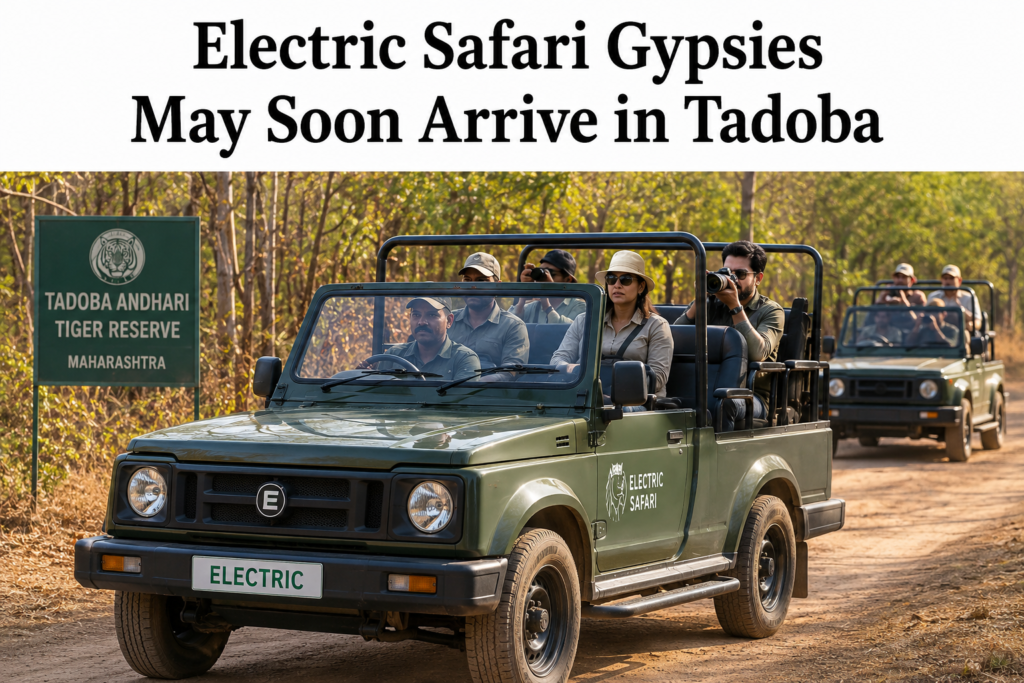
Nagpur: The Tadoba-Andhari Tiger Reserve (TATR) is working on a proposal to convert all tourist safari vehicles in the reserve to electric vehicles. The initiative aims to replace the petrol-operated Gypsies currently used for safaris, which together are estimated to consume more than 1,000 litres of fuel every day.
The move towards electric vehicles gained momentum after Prime Minister Narendra Modi recently emphasized the importance of fuel conservation. According to senior forest officials speaking to TOI, more than 300 safari vehicles are currently operating inside TATR, and almost all of them run on petrol. Each safari vehicle covers an average route of around 35 km daily, while many of these Gypsys have become outdated, making spare parts increasingly difficult to find.
The proposal will also explore financial support options to help local vehicle owners purchase new electric safari vehicles. Officials are considering support from both state and central government agencies along with private stakeholders to ease the financial burden.
TATR field director Prabhu Nath Shukla said that most of the Gypsys currently being used are no longer manufactured, making maintenance more challenging due to the limited availability of spare parts. He also noted that constant off-road driving inside the forest puts extra strain on these ageing vehicles.
Since these vehicles deliver mileage in single digits and travel over 30 km daily on safari routes, fuel expenses continue to rise rapidly for operators.
Keeping in mind the government’s focus on generating employment opportunities for villagers living near the Tadoba National Park, officials are also assessing the economic impact of replacing existing vehicles with electric models.
Shukla further stated that a new electric safari vehicle could cost around Rs 15 lakh or even more, raising concerns about affordability for local operators. He explained that authorities are exploring ways to involve additional stakeholders to help share the financial responsibility.
He added that wildlife tourism remains a major source of livelihood for the predominantly tribal communities living around the reserve, and therefore, the transition to cleaner fuel alternatives must be planned carefully while considering the affordability and economic stability of local residents.