
Introduction – When the Jungle Asked for Silence
At dawn in Tadoba Andhari Tiger Reserve in Maharashtra, the forest wakes in a way few places on Earth still do—without notifications, ringtones, or the artificial sounds of modern life. It wakes to langur alarm calls echoing through bamboo groves, to dry teak leaves crunching under unseen paws, and to the slow, confident territorial walk of a Bengal tiger returning from a night patrol.
For decades, visitors have arrived here seeking the unforgettable thrill of a Tadoba tiger safari experience in Maharashtra, hoping to witness the striped monarch in its natural habitat. Tadoba became famous for frequent tiger sightings, open landscapes, and raw wilderness that felt untouched by time.
But over the past few years, something else began entering the jungle along with tourists.
Selfies from safari jeeps. Live videos. Constant photo attempts—location sharing between vehicles. A quiet forest slowly turning into a place of digital excitement.
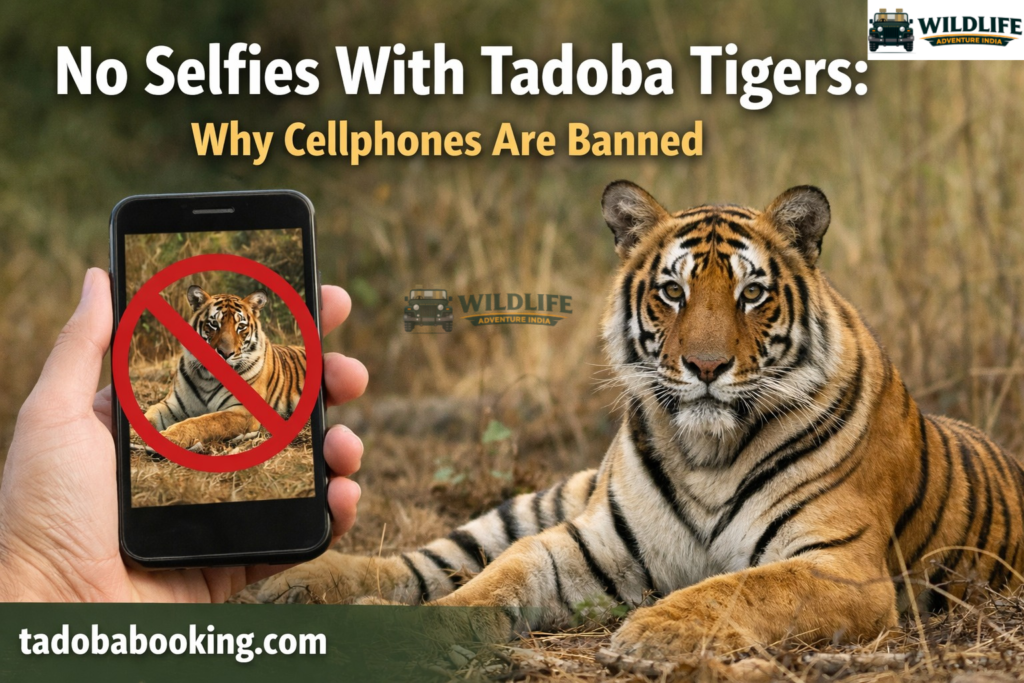
This growing behaviour is exactly why the phrase “No selfies with Tadoba’s tigers” is no longer just advice — it is now a strict rule enforced by forest authorities.
Tadoba officially introduced a cell phone ban inside the core safari zone, and understanding why mobile phones are banned in the Tadoba Tiger Reserve safari reveals a deeper story about wildlife protection, visitor safety, and ethical tourism.
If you are planning a safari, it is important to understand these rules before making your booking through the official Tadoba portal at Tadoba Safari Booking
Why “No Selfies With Tadoba’s Tigers” Became Necessary
Tadoba is one of India’s most successful tiger reserves under Project Tiger. Known for high tiger density and excellent visibility, it naturally attracts wildlife enthusiasts, photographers, and tourists from across the country.
However, rising tourist numbers brought new challenges. Safari behaviour started changing in ways that disturbed wildlife patterns.
Visitors began:
- Sharing live tiger sighting locations with other vehicles
- Urging drivers to rush toward animals for closer visuals
- Leaning out of jeeps for smartphone photos and videos
- Creating crowd situations around single animals
This pattern is now referred to by forest officials as ‘tiger chase culture’ during the Tadoba safari, a direct consequence of unrestricted phone usage.
The rule of no selfies with Tadoba’s tigers was introduced to stop this behaviour at its root.
Tiger Chase Culture and Vehicle Crowding During Sightings
Before the mobile phone ban in the Tadoba tiger reserve safari, a single tiger sighting would quickly turn chaotic.
One jeep spots a tiger. A message goes out. Within minutes, multiple safari vehicles converge at the same spot.
This caused:
- Severe vehicle congestion in narrow forest routes
- Noise and constant engine sounds near wildlife
- Tigers feel surrounded and alter their natural movement paths
By removing phones, Tadoba removed the communication chain that caused overcrowding during tiger sightings.
Why Smartphone Photography Is Harmful in Tiger Safaris
Unlike DSLR cameras with powerful zoom lenses, smartphones encourage visitors to get physically closer for clear images.
This leads to:
- Drivers are pressured to approach animals closely
- Tourists leaning out for better angles
- Increased stress and discomfort for tigers
This is a primary reason behind the cellphone ban inside the Tadoba safari core zone. The issue was never photography — it was phone-driven proximity to wildlife.
Geo-Tagging, Social Sharing, and Wildlife Risk
Modern smartphones embed location data in images. When visitors post tiger photos online, they unknowingly reveal:
- Tiger movement routes
- Waterhole locations
- Frequently used forest paths
This digital footprint can be misused. The mobile phone restrictions in Tadoba National Park reduce the risk of sensitive wildlife data being exposed.
A similar conservation step has been seen in Ranthambore as well. You can read about it here:
Click here to understand the phone ban at Ranthambore
A Phone-Free Tadoba Safari Experience Is More Immersive
Many visitors report that a phone-free Tadoba tiger safari experience feels calmer and more meaningful.
Without screens:
- Visitors notice bird calls and alarm signals.
- They observe pugmarks and subtle forest signs.
- They listen more carefully to guides.
This is now described as mindful wildlife observation during the Tadoba jungle safari.
How the Cellphone Ban Works in Tadoba
To strictly implement the rule:
- Phones are collected at the safari entry gate.
- Stored in a locked box on the vehicle
- Returned only after exiting the core zone
If you are booking a jeep safari, you will encounter this process during your booking.
Photography Is Allowed — But Responsibly
Visitors are encouraged to carry:
- DSLR or mirrorless cameras
- Telephoto lenses
- Binoculars
These tools support responsible wildlife photography in Tadoba Tiger Reserve without disturbing animals.
Why This Rule Is Spreading Across Indian Tiger Reserves
Tadoba’s move is part of a larger pattern. Parks like Corbett and Ranthambore are also introducing phone restrictions.
This reflects a shift toward ethical wildlife tourism practices in Indian national parks and the reduction of human disturbance in tiger habitats.
How to Prepare for Tadoba Safari Without Your Phone
If you’re searching for how to follow the Tadoba safari mobile phone ban rules, prepare like this:
Before safari
- Carry a Zoom camera
- Pack binoculars
During safari
- Stay quiet and patient.
- Follow the guide instructions
- Avoid requesting close approaches
What “No Selfies With Tadoba’s Tigers” Really Teaches Us
This rule teaches visitors a powerful lesson:
The jungle is not a background for social media.
It is a living ecosystem where humans are guests.
FAQs
No. Mobile phones are not allowed inside the core safari zone of Tadoba Andhari Tiger Reserve. All phones are collected at the entry gate and returned after you exit the core area.
The ban was introduced to stop tiger chase culture, reduce vehicle crowding during sightings, prevent risky selfie behaviour, and protect wildlife from disturbance caused by constant phone usage.
No. Phones must be deposited at the gate. Even switched-off phones are not permitted inside the core safari zone.
Phones are collected at the entry gate, placed in a locked box on the safari vehicle, and returned only after the safari ends.
No. Photography is allowed using DSLR or mirrorless cameras with zoom lenses. The restriction is only on smartphones.
DSLR cameras allow photography from a distance using zoom lenses, while smartphones encourage people to move closer, causing stress to animals and posing safety risks.
Phones are collected at the entry gate, placed in a locked box on the safari vehicle, and returned only after the safari ends.
No. Photography is allowed using DSLR or mirrorless cameras with zoom lenses. The restriction is only on smartphones.
DSLR cameras allow photography from a distance using zoom lenses, while smartphones encourage people to move closer, causing stress to animals and posing safety risks.
It refers to vehicles rushing toward tiger sightings after receiving location updates via phone, leading to overcrowding and disturbance to wildlife.
DSLR cameras allow photography from a distance using zoom lenses, while smartphones encourage people to move closer, causing stress to animals and posing safety risks.
Conclusion – The Memory That Stays With You
You may leave Tadoba without a tiger selfie.
But you will leave with a rare memory — watching a wild tiger move freely, undisturbed, unaware of human presence.
And that is the true reason behind no selfies with Tadoba’s tigers and the cellphone ban inside the reserve.
Conclusion – The Memory That Stays With You
You may leave Tadoba Andhari Tiger Reserve without a tiger selfie or mobile video. But you will carry something far more powerful — the unforgettable sight of a wild Tadoba tiger moving freely in its natural habitat, undisturbed by camera flashes, ringing phones, or human interference. The cellphone ban in Tadoba safari is not about restricting tourists. It’s about protecting wildlife, ensuring tiger safety, and preserving the raw, authentic jungle experience that makes Tadoba special. And that is the real reason behind no selfies with Tadoba tigers — because some moments are meant to be lived, not captured.