
Understanding the Real Question Behind “Best Time to Visit Tadoba”
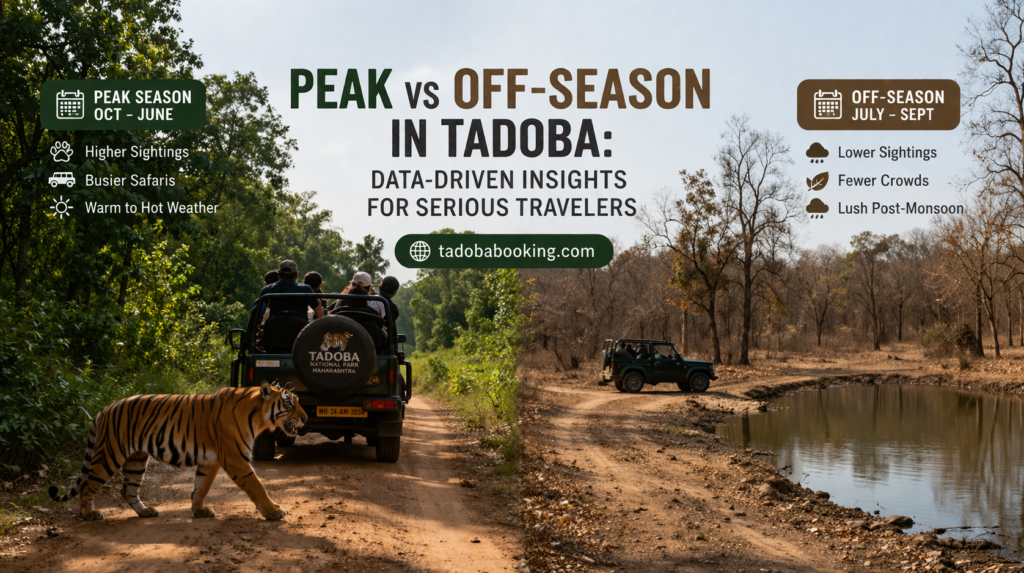
There’s a common mistake many travellers make when planning a safari in Tadoba—they search for the best time to visit and expect a simple answer. But Tadoba doesn’t work like that. This landscape of dry deciduous forests, shrinking waterholes, and territorial predators responds sharply to seasonal shifts. If you look closely, the question isn’t when Tadoba is at its best, but rather what kind of experience you’re optimising for.
A data-driven view of Tadoba reveals something more interesting than generic travel advice. It shows a pattern—one where climate, vegetation density, and water availability directly influence wildlife visibility. In other words, your safari outcome is less about luck and more about timing aligned with ecological behaviour.
Winter in Tadoba: Comfort, Crowds, and Lower Visibility
During the winter months, from October to February, Tadoba feels welcoming. The mornings are crisp, the afternoons mild, and the forest is alive with colour. This is when most travellers arrive, drawn by comfortable weather and the promise of a pleasant jungle experience. But beneath that comfort lies a hidden trade-off. The forest is dense, water sources are plentiful, and animals—especially tigers—don’t need to move much. They remain deep within the cover, often invisible even when they are close.
Data from experienced safari guides consistently suggests that tiger sighting chances in Tadoba drop during winter, not because the animals disappear, but because the forest conceals them better.
Summer in Tadoba: Heat, Harshness, and High Sighting Probability
Summer tells a completely different story. From March to June, Tadoba transforms into a harsher, more demanding environment. Temperatures climb aggressively, often exceeding 40°C, and the lush green canopy of winter gives way to dry, open terrain. At first glance, this might seem like the worst time to visit. But for serious wildlife travellers, this is when Tadoba becomes most predictable—and most rewarding.
As water sources shrink, animals are forced into patterns. Tigers, leopards, deer, and even sloth bears begin frequenting the same limited waterholes. Movement increases, visibility improves, and sightings become less random. This is why seasoned photographers and wildlife enthusiasts often prefer summer safaris. The data-backed insight here is simple but powerful: the best time for tiger sighting in Tadoba is summer, not because there are more tigers, but because the environment makes them easier to find.
The Core Trade-Off: Comfort vs Wildlife Experience
This creates a fascinating dilemma. Winter offers comfort but lower visibility, while summer delivers intensity and a higher probability of sightings. The choice becomes a trade-off between physical ease and wildlife success. And this is where most casual travel guides fail—they treat all travellers the same. A family looking for a relaxed holiday and a photographer chasing a dominant male tiger are not playing the same game.
How Tadoba Compares with Other Tiger Reserves
If you observe patterns across central Indian reserves like Bandhavgarh National Park and Kanha National Park, Tadoba stands out for how sharply seasonality affects visibility. Its relatively dry ecosystem amplifies the summer advantage, making it one of the most reliable parks in India for tiger sightings during peak heat. This is also why the phrase “Tadoba safari summer experience” has gained traction among serious travellers—it reflects a shift from comfort-driven tourism to outcome-driven exploration.
Crowd Patterns, Pricing, and Strategic Timing
Another layer to consider is crowd behaviour. Winter, often labelled as the peak season, sees higher tourist density, increased booking pressure, and premium pricing. Summer, despite offering better sighting conditions, experiences a drop in casual visitors due to the heat. This creates a unique opportunity. Those willing to tolerate the climate are rewarded not only with better sightings but also with fewer vehicles at key zones and more focused safari experiences. From a purely analytical perspective, this makes summer a high-efficiency window for those prioritising results.
The Smart Window: Balancing Comfort and Sightings
Yet, the smartest strategy may not lie at either extreme. The transition period between late winter and early summer—especially February to early March—offers a compelling middle ground. During this time, vegetation begins to thin, temperatures are still manageable, and animal movement gradually increases. For travellers seeking a balance between comfort and performance, this window represents a strategic sweet spot in Tadoba safari season planning.
Final Insight: Timing Matters More Than Season Labels
Ultimately, Tadoba doesn’t reward those who follow generic advice. It rewards those who understand its rhythms. A data-driven Tadoba safari planning approach reveals that visibility, not just presence, defines success. It shows that wildlife visibility in Tadoba National Park by season is the single most important factor influencing your experience. And it makes one thing very clear—there is no universally “best” season, only the best-aligned decision based on your intent.
If your goal is relaxation, winter will satisfy you. If your goal is to witness raw, unscripted wildlife moments, summer is unmatched. But if your goal is to truly understand Tadoba—to read its patterns, anticipate its movements, and experience it beyond the surface—then timing your visit becomes less about convenience and more about strategy.