Introduction to Tadoba Andhari Tiger Reserve
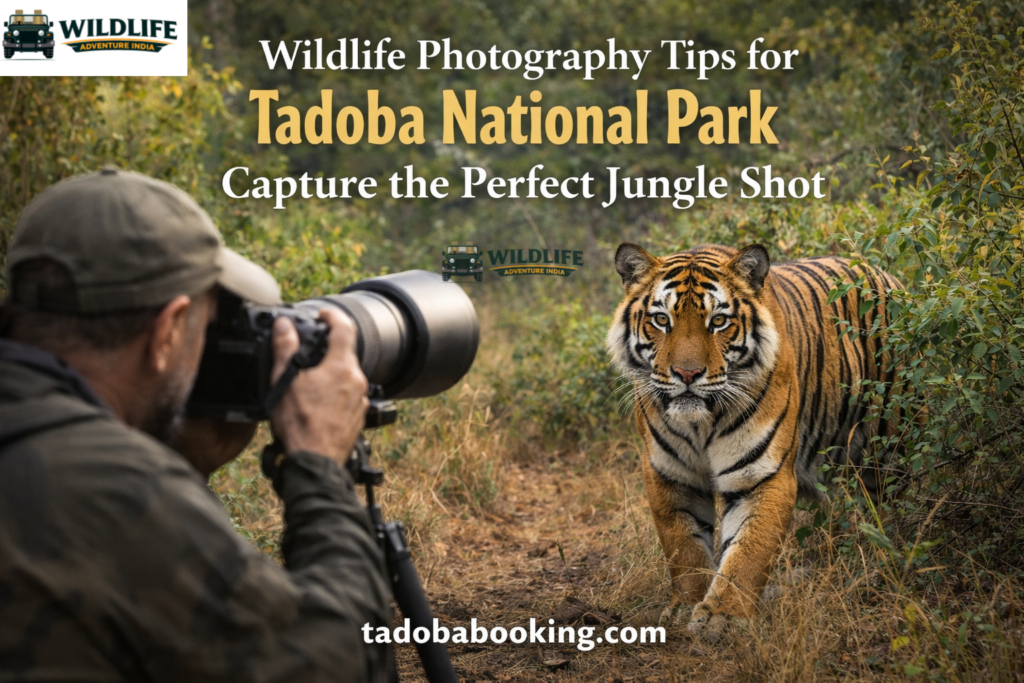
Tadoba Andhari Tiger Reserve is one of India’s premier wildlife destinations, renowned for its thriving tiger population, diverse wildlife, and dense forests, offering photographers a once-in-a-lifetime opportunity to capture stunning jungle moments. Whether you are a beginner exploring wildlife photography for the first time or a seasoned professional aiming for that award-winning frame, Tadoba presents unique opportunities as well as distinct challenges from understanding the terrain to mastering your camera settings, from planning your visit to editing your final shots; every stage of the journey matters. This comprehensive guide will help you prepare, shoot, and refine your wildlife images to capture the perfect jungle shot.
Why Tadoba is a Photographer’s Paradise
Located in the state of Maharashtra, Tadoba spreads across more than 1,700 square kilometres of rugged dry deciduous forests, bamboo thickets, grasslands, and water bodies. What makes Tadoba especially attractive for wildlife photographers is its relatively high density of Bengal tigers and the better visibility compared to dense rainforest reserves. The open forest structure increases your chances of clear sightings of tigers, leopards, sloth bears, wild dogs, deer species, and a wide variety of birds. The landscape changes with the seasons, offering different moods, textures, and lighting conditions throughout the year. However, simply arriving at the right location does not guarantee a remarkable photograph. Capturing extraordinary wildlife images requires preparation, patience, awareness, and technical understanding.
Best Time to Visit for Wildlife Photography
Planning your photography trip carefully can significantly improve your chances of success. Tadoba operates seasonally, and choosing the right time to visit can influence the type of images you capture. The winter months from October to February offer cooler mornings, pleasant weather, and good wildlife visibility, making it an excellent time for overall photography. The summer months from March to June dramatically increase the chances of spotting tigers near waterholes as animals gather around shrinking water sources. Although the light can be harsh during summer afternoons, the intensity of animal activity can result in powerful action shots. The monsoon season typically sees safari closures, and while the forest turns lush and green, access is limited. For most photographers, especially beginners, the period between September and February provides the most balanced experience in terms of comfort and reliable sightings.
Choosing the Right Camera Body
When it comes to gear, the camera body is important, but your lens is even more critical. A DSLR or mirrorless camera with fast and accurate autofocus and good high ISO performance is ideal. Wildlife moments unfold quickly, so your camera must respond instantly. Battery life is also important because long safari hours can drain power faster than expected. Shooting in aperture priority or full manual mode gives you better creative control over exposure in changing forest light conditions.
Selecting the Ideal Lenses
Your lens choice will largely determine the quality and versatility of your wildlife images. A telephoto zoom lens in the 100–400 mm or 150–600 mm range is highly recommended for Tadoba, as it allows you to capture distant subjects without disturbing them. Prime lenses such as 300mm, 400mm, or 500mm provide exceptional sharpness and better low-light performance, though they are less flexible in framing. A wide-angle lens can also be valuable for habitat shots, environmental portraits, or landscape storytelling images that show animals within their natural surroundings. If you can carry only one lens, prioritise reach. Tadoba’s terrain often requires longer focal lengths to frame subjects properly.
Support Equipment for Stability
Support equipment can improve stability and comfort during safaris. A monopod is often preferred because it is lighter and easier to manage inside a safari vehicle. A gimbal head allows smooth tracking of moving animals and is particularly useful with heavy telephoto lenses. While tripods are less practical in safari vehicles, they can be beneficial for landscape photography or low-light work outside safari hours where permitted.
Essential Photography Accessories
Accessories play an essential role in ensuring a smooth photography experience. Extra batteries are a must, as early morning and afternoon safaris can be long and demanding. Carry ample memory cards to avoid running out of storage during critical moments. A lens cleaning kit is extremely useful because Tadoba’s dusty trails can quickly coat your equipment. Rain protection, even during dry seasons, can safeguard your gear from sudden weather changes. A comfortable strap or harness will reduce fatigue during extended shooting sessions.
Safari Strategy and Timing
Safari strategy is just as important as equipment. Safaris are regulated and time-bound, so you must use your time efficiently. Morning safaris often offer soft golden light and active wildlife behaviour, while afternoon safaris can produce dramatic lighting as the sun lowers, especially around water bodies where animals gather. Experiencing both time slots allows you to capture different moods and behavioural patterns.
Positioning for the Perfect Shot
Vehicle positioning plays a crucial role in photography success. Always be mindful of the direction of sunlight and try to position yourself so the light falls evenly on your subject rather than creating harsh shadows. Avoid letting shadows from trees or the vehicle fall across the animal. If the animal moves, reposition gradually and calmly without causing disturbance. Patience is key in wildlife photography, and often waiting quietly yields better results than constant movement.
Mastering Camera Settings
Understanding camera settings is fundamental to capturing sharp and compelling images. Wildlife subjects are rarely still, so maintaining an adequate shutter speed is critical. For large mammals that are walking slowly, a shutter speed of around 1/500 second is generally sufficient. For running animals or dynamic tiger movements, increasing the shutter speed to 1/1000 or even 1/2000 seconds helps freeze motion. Birds in flight require even faster shutter speeds to maintain sharpness. Aperture selection affects depth of field. Wider apertures, such as f/4 to f/6,3 help blur distracting backgrounds and isolate the subject, while narrower apertures, such as f/8 to f/11, can bring more of the scene into focus, which is useful for group compositions or environmental portraits.
ISO settings should be tailored to match the lighting conditions. In bright daylight, lower ISO values maintain clean images with minimal noise. In shaded forest areas or during early mornings, increasing ISO may be necessary to maintain fast shutter speeds. Modern cameras handle higher ISO levels better than older models, so do not hesitate to increase ISO if it ensures sharpness. Autofocus mode selection is equally important. Continuous autofocus helps track moving subjects effectively, while single-point focus allows precise focusing on the animal’s eye. Always aim for sharp eyes, as they bring life and emotion into wildlife photographs.
Understanding Wildlife Behaviour
Understanding wildlife behaviour dramatically improves your chances of capturing powerful moments. Tigers exhibit behaviours such as marking territory, drinking at waterholes, resting in shade, or crossing forest trails. Observing signs like scratch marks on trees or fresh pugmarks can indicate recent activity. Leopards are more elusive and often rest in trees or blend seamlessly into shaded areas, so scanning elevated branches and darker forest sections increases your chances of spotting them. Bird photography demands patience and quick reflexes, especially when capturing flight moments or interactions near water bodies.
Composition Techniques That Elevate Your Shots
Composition transforms a good wildlife photograph into a memorable one. Instead of placing your subject in the centre of the frame, try positioning it according to the rule of thirds to create balance and visual interest. Leading lines, such as forest trails or water edges, can guide the viewer’s eye toward the subject. Shooting at eye level whenever possible creates intimacy and connection between the viewer and the animal. Leaving space in the direction an animal is looking or moving adds a sense of motion and narrative to the frame.
Working with Natural Light
Light plays a defining role in wildlife photography. Early morning and late afternoon golden hours provide warm tones and soft shadows that enhance textures and colours. Midday light can be harsh and create strong contrasts, but using shaded areas or adjusting exposure slightly can help preserve details. Backlighting can produce dramatic silhouettes or glowing fur outlines if used carefully. Managing exposure compensation allows you to retain highlight details and avoid overexposed patches.
Ethical Wildlife Photography Practices
Ethical practices must always guide your actions in the jungle. Wildlife photography should never disturb natural behaviour. Avoid making noises to attract animals, never use flash photography, and always remain inside the safari vehicle as per park regulations. Keeping a safe distance protects both your safety and the welfare of the animals. Responsible photography contributes to conservation rather than disrupting it.
Advanced Techniques for Creative Impact
As you gain confidence, experimenting with advanced techniques can enhance creativity. Panning shots using slower shutter speeds can create motion blur that conveys movement while keeping the subject relatively sharp. Burst mode helps capture rapid sequences, increasing the chance of freezing peak action moments. Exposure bracketing and careful post-processing can help balance challenging light conditions in landscapes featuring wildlife.
The Power of Storytelling in Wildlife Photography
Storytelling is the essence of compelling wildlife photography. Instead of focusing only on portraits, try capturing behaviour, interaction, habitat context, and emotion. A tiger walking through golden grass, a leopard resting on a branch, or birds lifting off from a waterhole all tell unique stories. Asking yourself what is happening in the scene and why can help you compose images that resonate deeply.
Post-Processing for Professional Results
Post-processing refines your work and enhances visual impact. Editing software such as Lightroom or Photoshop can help adjust exposure, correct white balance, enhance clarity, and reduce noise. Cropping can improve composition, but avoid excessive cropping that reduces image quality. Subtle adjustments often produce more natural and powerful results than heavy filters. Wildlife photography benefits from realism and authenticity.
Avoiding Common Wildlife Photography Mistakes
Common mistakes include using slow shutter speeds, failing to track moving subjects, overexposing highlights, and ignoring distracting backgrounds. Anticipation, practice, and awareness can prevent these errors. Positioning your vehicle strategically rather than waiting passively for animals to approach increases your chances of capturing dynamic frames.
Mental Preparation and Patience
Mental preparation is equally important. Wildlife photography demands patience and resilience. There may be long stretches without sightings, but staying attentive ensures you do not miss unexpected moments. Embrace stillness, appreciate the environment, and celebrate small observations. Every safari is a learning experience.
Safety in the Wild
Safety must never be compromised. Always adhere to the guidance provided by your guide and driver. Avoid sudden movements and maintain safe distances from animals, especially predators. Wild animals are unpredictable, and respecting their space ensures both your safety and theirs.
Final Thoughts: Capturing the Magic of Tadoba
In the end, wildlife photography in Tadoba goes far beyond technical perfection. It is about connection, presence, and respect for nature. The jungle may test your patience, challenge your skills, and surprise you with its unpredictability. But when that perfect moment arrives — a tiger pausing in golden light, a leopard emerging from shadows, or a bird spreading its wings against the dawn sky — you will understand the magic of the wild. Every photograph becomes more than an image; it becomes a story of patience, observation, and harmony with nature.