
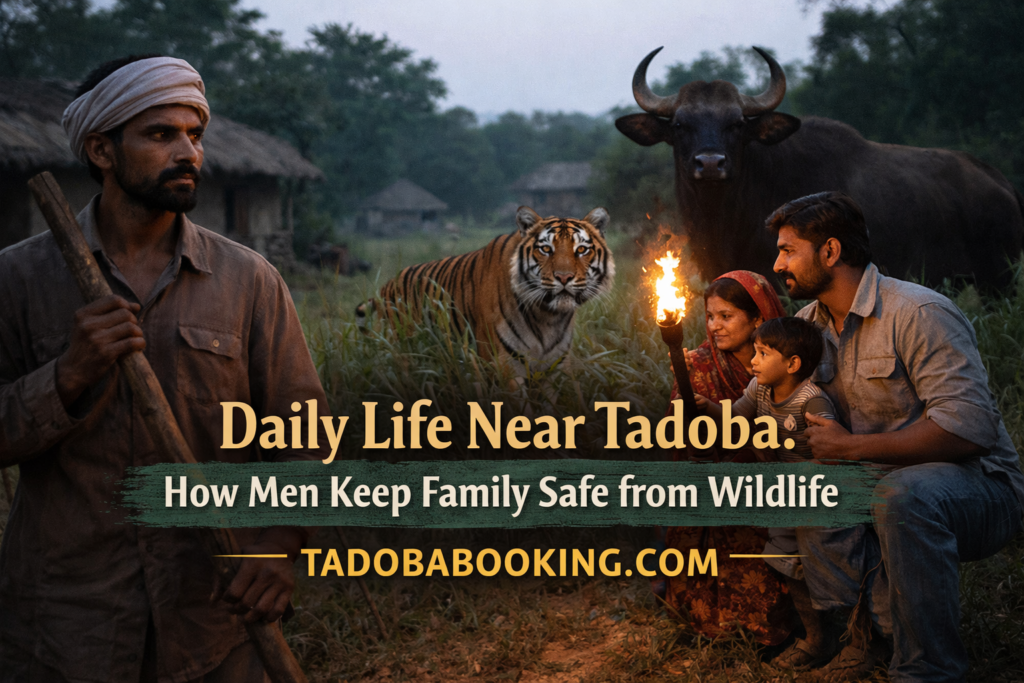
Living close to a forest like Tadoba Andhari Tiger Reserve is both beautiful and challenging. On one side, there is fresh air, greenery, and wildlife. On the other side, there is a constant need to stay alert, especially when animals like the Bengal Tiger, leopards, or wild boars move close to villages.
For families living near Tadoba, daily life is not like city life. Here, men play an important role in protecting their families and managing risks that come with living near a tiger reserve.
Life Near Tadoba Starts in Early Villages
In villages around Tadoba, the day usually begins before sunrise. Men wake up early to go for farming, grazing cattle, or collecting forest resources. But before stepping out, they always check their surroundings.
It is common to hear villagers asking each other if any animal movement was seen during the night. This daily communication helps everyone stay alert and avoid dangerous situations.
Staying Alert at All Times
One of the most important habits villagers follow is staying alert. Wildlife can move silently, especially animals like tigers and leopards. Men are trained by experience to notice small signs such as:
- Fresh pugmarks
- Alarm calls from deer or monkeys
- Unusual silence in the forest
- Movement in bushes
These signs help them understand if a predator is nearby. This awareness often prevents dangerous encounters.
Protecting Family During Night
Nighttime is the most sensitive period for villages near forests. Wild animals are more active after sunset. To keep their families safe, men take extra precautions:
- Keeping doors and livestock areas properly closed
- Using solar lights or torches outside homes
- Avoiding unnecessary movement at night
- Staying in groups if stepping out
In many villages, people avoid going out alone after dark unless it is very important.
Safety While Farming and Grazing
Farming fields are often located close to forest areas. While working in farms or taking cattle for grazing, men always stay cautious.
They usually:
- Work in groups instead of alone
- Carry sticks or tools for safety
- Keep an eye on surroundings
- Bring cattle back before sunset
This routine helps reduce the risk of sudden wildlife encounters.
Role of Experience and Local Knowledge
Men living near Tadoba National Park have years of experience dealing with wildlife. They understand animal behavior better than most people.
For example:
- They know which areas are frequently used by tigers
- They can identify animal movement patterns
- They avoid risky zones during certain times
This local knowledge is one of the biggest reasons why many villages manage to live safely near wildlife.
Support from Forest Department
The forest department also plays an important role in helping villagers stay safe. Awareness programs are conducted to educate people about wildlife behavior and safety measures.
Initiatives under Project Tiger focus not only on protecting animals but also on reducing human-wildlife conflict.
In some areas, compensation is also provided if livestock is attacked by wild animals, which helps villagers manage losses.
Living with Wildlife: A Balanced Life
Life near Tadoba Andhari Tiger Reserve is about balance. People respect the forest and understand that wildlife is a part of their surroundings.
Men take responsibility for keeping their families safe, but they also avoid harming animals. This balance helps both humans and wildlife survive together.
Real Strength of Village Life
The real strength of villages near Tadoba lies in unity and awareness. People support each other, share information, and act quickly in case of danger.
While the presence of animals like the Bengal Tiger can be risky, it also teaches villagers to stay disciplined, alert, and connected with nature.
Conclusion
Daily life near Tadoba is not easy, but it is full of courage and understanding. Men play a key role in protecting their families by staying alert, following safety practices, and using their experience.
Their lifestyle shows that it is possible to live close to nature while staying safe. It is a story of respect, survival, and coexistence between humans and wildlife.