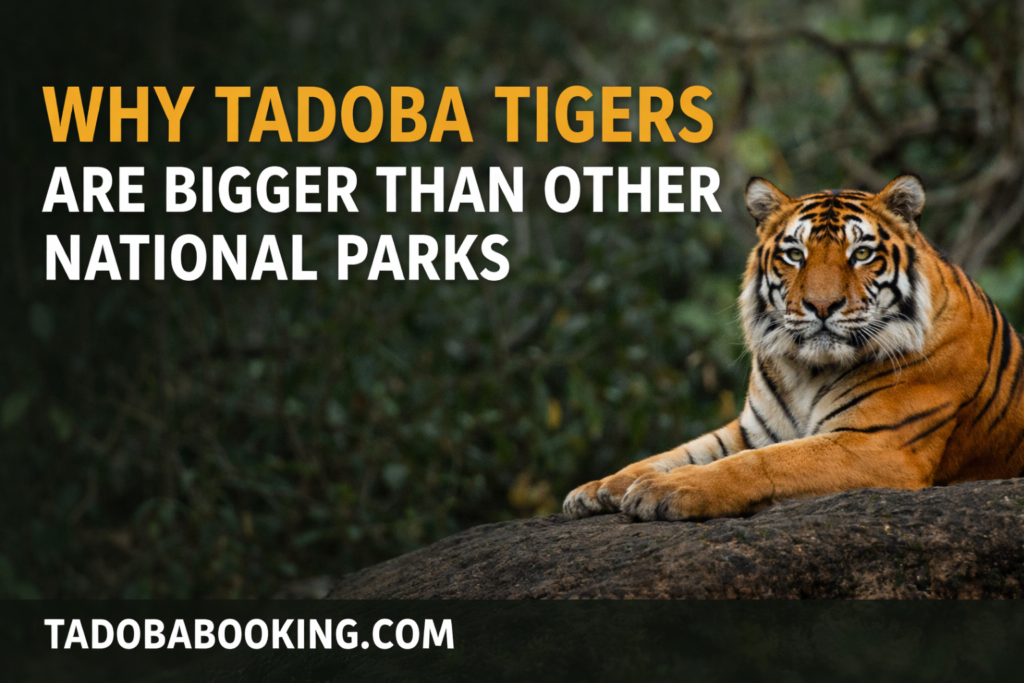
Tadoba-Andhari Tiger Reserve in Maharashtra has gained a strong reputation among wildlife lovers for its powerful and often larger-looking tigers. Many Tadoba safari visitors and photographers frequently notice that Tadoba tigers appear bulkier, taller, and more muscular compared to tigers from other national parks like Ranthambore, Bandhavgarh, or Kanha. This observation is not just a myth—several ecological and environmental reasons explain why Tadoba tigers tend to grow larger in size.
From prey availability to habitat conditions, every factor in Tadoba supports the healthy growth of its big cats. Understanding these reasons helps us appreciate why this reserve is becoming one of India’s top destinations for tiger sightings and wildlife tourism.
Rich Prey Base Supports Bigger Tiger Growth
One of the biggest reasons behind the large size of Tadoba tigers is the abundance of prey. The reserve is home to a healthy population of herbivores such as sambar deer, chital (spotted deer), nilgai, and wild boar. These animals provide a consistent and protein-rich food supply for tigers.
When a tiger has regular access to large prey, it doesn’t need to struggle for survival. Instead, it can focus on growing stronger and maintaining its territory. A well-fed tiger naturally develops more muscle mass, which contributes to its bigger appearance. Compared to parks where prey density fluctuates, Tadoba offers a stable ecosystem that directly impacts tiger size.
Ideal Habitat and Climate Conditions
Tadoba’s dry deciduous forest, mixed with bamboo and open grasslands, creates an ideal habitat for tigers. The terrain allows easy movement and efficient hunting, which helps tigers conserve energy. Less energy spent on hunting means more energy available for growth and strength.
The relatively warmer climate in Tadoba also plays a role. Unlike colder regions where animals may develop thicker fur but not necessarily more muscle, Tadoba’s environment supports active hunting and physical development throughout the year. This consistent activity contributes to the overall robust build of its tigers.
Strong Territory and Low Competition Pressure
Another important factor is territory. Tadoba has well-defined Safari zones where dominant tigers establish strong territories. When a tiger successfully controls a territory rich in prey, it faces less competition and stress.
Lower stress levels mean better health and growth. In highly competitive reserves, tigers often engage in frequent conflicts, which can lead to injuries or reduced access to food. In Tadoba, many dominant tigers maintain stable territories for longer periods, allowing them to grow bigger and stronger over time.
Genetics and Bloodline Influence
Genetics also plays a significant role in determining tiger size. Tadoba has produced some famous and dominant tiger lineages over the years. When strong and healthy tigers reproduce, their offspring inherit these physical traits.
Over time, this leads to a population where larger body size becomes more common. While genetics alone is not the only factor, it works in combination with habitat and diet to produce the impressive tigers that Tadoba is known for today.
Less Human Disturbance in Core Areas
Although Tadoba is a popular Gypsy safari destination, its core zones remain well-protected. Limited human interference in these areas allows tigers to live more naturally. They can hunt, rest, and move freely without constant disturbance.
This peaceful environment reduces stress and supports better physical development. Tigers that are not frequently disturbed tend to have more stable routines, which contributes to their overall health and size.
Better Water Availability Throughout the Year
Water is another crucial factor that indirectly affects tiger size. Tadoba tigers has several natural and artificial water sources that remain active even during summer. This ensures that prey animals stay within the reserve instead of migrating elsewhere. As a result, tigers always have access to food. Continuous prey availability means consistent nutrition, which plays a direct role in building a tiger’s body mass and strength.
Tadoba Tigers vs Other National Parks
When compared to other reserves like Ranthambore or Bandhavgarh, the difference in tiger size often comes down to a combination of all these factors. While those parks also have strong tiger populations, variations in prey density, habitat type, and competition levels can influence how large the tigers grow.
Tadoba offers a balanced ecosystem where food, water, territory, and protection come together perfectly. This balance creates ideal conditions for tigers to reach their full physical potential.
Conclusion
The reason why Tadoba tigers are bigger than those in many other national parks is not due to a single factor but a combination of multiple natural advantages. A rich prey base, suitable habitat, strong genetics, stable territories, and minimal disturbance all contribute to their impressive size.
For wildlife enthusiasts and photographers, this makes Tadoba-Andhari Tiger Reserve a truly special place. Not only does it offer a high chance of tiger sightings, but it also gives visitors an opportunity to witness some of the most powerful and well-built tigers in India.
FAQ
Tadoba tigers are often bigger due to a rich prey base, ideal habitat, strong territory control, good genetics, and low human disturbance. These factors provide better nutrition and stable living conditions, helping tigers grow larger and stronger.
Yes, prey availability plays a major role. Tadoba has a high population of animals like sambar, chital, and wild boar, which provide consistent food. Regular access to large prey helps tigers develop more muscle and body mass.
Genetics is an important factor. Strong and dominant tiger lineages in Tadoba pass on traits like larger body size and strength to their offspring, contributing to bigger tigers over time.
In many cases, Tadoba tigers appear bulkier and more muscular compared to some tigers in Ranthambore and Bandhavgarh. However, tiger size can vary individually depending on habitat, food, and territory conditions.
Tadoba’s dry deciduous forest and open landscape make hunting easier and more efficient. This reduces energy loss and helps tigers maintain better health and physical growth.
Yes, limited disturbance in core zones allows tigers to live stress-free. A calm environment supports better feeding patterns, rest, and overall physical development.
Tadoba is known for having some of the most powerful and large-built tigers, but parks like Kaziranga, Bandhavgarh, and Ranthambore also have big tigers. Size depends on multiple ecological factors, not just location.