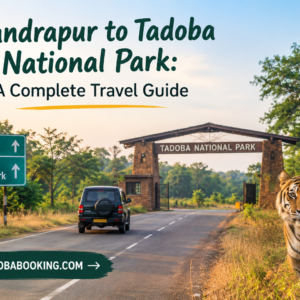

June is the closing month for safaris in Tadoba National Park. Once the month closes out, the forest gates shut for the monsoon and the next safari window does not open until mid-October. If you have been putting off your Tadoba trip, this is your last real call for 2026. The good news is that June is not just a deadline, it is one of the most thrilling months to be inside the jungle.
When Does Tadoba Safari Season End?
Tadoba Andhari Tiger Reserve follows a fixed annual calendar. The core zones are open from October 15 to June 30. From July 1 to mid-October, heavy monsoon rainfall makes forest tracks dangerous and inaccessible, and all core zone safaris are suspended.
One important distinction sets Tadoba National Park apart from other Indian tiger reserves — its buffer zones remain accessible for safari even during the monsoon. So while the core jungle goes off-limits, travellers willing to explore buffer areas can still experience the reserve in the rains. For the full core zone safari experience however, June 30 is the hard cutoff.
The park is also closed every Tuesday regardless of season. Keep this in mind when finalising your travel dates, especially if you are booking a short two or three day trip in June.
Why June is One of the Best Months to Safari in Tadoba
Counterintuitively, June delivers some of the most rewarding tiger sightings of the entire year. Here is why.
As temperatures push past 40°C and in some years edge toward 45 to 48°C, permanent water sources become lifelines. Tigers, leopards, sloth bears, wild dogs, gaur, and deer all converge on the same lakes and waterholes. The teak trees have shed most of their leaves, reducing forest cover dramatically. Visibility across the landscape is at its highest point of the year.
What this creates inside the jungle is a concentration effect. Animals that would ordinarily spread across kilometres of territory are now anchored to a small number of water points. A wildlife photographer sitting near a waterhole in Moharli or Kolara zone in June has a genuinely high chance of watching a tiger arrive, drink, and rest nearby — sometimes for extended periods.
June is also when tiger territorial behaviour reaches its annual peak, making sightings more active and dynamic than the quieter months. If your goal is not just to see a tiger but to watch one behave, mark, patrol, rest, hunt — June consistently delivers this.
The trade-off is the heat. Afternoon temperatures are unforgiving. The strategy is simple: book the earliest morning safari slot available, carry more water than you think you need, wear light breathable cotton, and a hat. The morning hours between 5:30 AM and 6:30 AM are the most comfortable and the most productive.
What You Can See in Tadoba This June
- Tigers — Tadoba is home to over 90 Bengal tigers, and June concentrates them near permanent water. Famous individuals like Maya, Chota Matka, and their offspring are frequently spotted near core zone waterholes during this period.
- Leopards — Often overlooked in the excitement around tigers, Tadoba’s leopard population is healthy and increasingly active near water in summer.
- Sloth Bears — June sightings of sloth bears are common near open meadow edges and fruit trees.
- Birds — Summer is the window for the colourful Indian Pitta before it departs with the monsoon. The Paradise Flycatcher, Black-Naped Monarch, and various owl species including the Mottled Wood Owl are active on safari drives.
- Gaur and Deer — Large herds gather around water bodies, which in turn attract predators. This prey density is a key reason tiger sightings are so reliable in summer.
Safari Zones to Prioritise Before Season End
Tadoba National Park operates across six zones divided into core and buffer areas. For June visits focused on tiger sightings, three zones consistently deliver results.
Moharli — The oldest and most established zone. Excellent waterhole visibility and a high density of big cats. Book early as this is the most in-demand zone.
Kolara — Known for frequent Maya sightings and open terrain that makes tiger tracking easier. A favourite among wildlife photographers.
Navegaon — Slightly less crowded than Moharli and Kolara with strong wildlife activity. A good option if the top zones are fully booked when you check.
Buffer zones including Agarzari, Pangdi, and Ramdegi offer a quieter, less structured alternative and are worth adding as a second safari to any itinerary.
Book Before Permits Disappear
Tadoba safari permits can be booked up to 120 days in advance. By the time June arrives, the most popular zones and morning slots are already heavily booked. Walk-in counter bookings exist but are unreliable; most good slots are taken online well before the date.
If you are reading this and June travel is on your mind, do not wait. Use tadoba safari booking to check real-time permit availability across all zones, compare morning and evening safari timings, and secure your slot before the season closes. Resorts near Tadoba also fill up quickly in the final weeks of season, so accommodation and safari need to be arranged together.
After June — What Happens Next
Core zones close on June 30. From July through September, the forest regenerates under heavy rainfall. The landscape transforms into dense green cover and the wildlife disperses across the jungle without the pressure of drought. Access is limited to buffer zone safaris only during this period.
Core zones reopen from October 15. The post-monsoon forest is stunning, rich, green, and fresh. Wildlife activity gradually rebuilds as the season progresses. If you miss June, October is the next opportunity, though the concentrated waterhole sightings of summer will not return until the following March.
Frequently Asked Questions
The Tadoba safari season for core zones ends on June 30, 2026. The park closes for the monsoon from July 1 to October 14.
Yes. June is fully open for morning and evening safaris across all core and buffer zones until June 30.
Tadoba core zones reopen from October 15 every year after the monsoon closure ends.
Yes. June is one of the best months for tiger sightings. High heat forces tigers and all wildlife to concentrate near permanent waterholes, making sightings highly predictable.
Moharli and Kolara are the top zones in June for tiger sightings. Navegaon is a strong alternative if the primary zones are booked.
Yes. Tadoba National Park is closed every Tuesday throughout the year, including during the safari season. Plan your visit accordingly.
Yes. Unlike most tiger reserves, Tadoba buffer zones remain accessible for safaris even during the July to September monsoon closure of core zones.
At least four to six weeks in advance. Safari permits can be booked up to 120 days ahead and June slots fill up quickly.
Conclusion
June is not just the end of the Tadoba safari season — it is one of its finest moments. The forest is stripped back, the waterholes are busy, and the tigers are out in the open more reliably than at almost any other time of year. Once June 30 passes, the gates close and the next opportunity is three months away. Every day you wait for one fewer safari slot available. Whether you are a first-time visitor finally making the trip or a returning wildlife enthusiast chasing that perfect sighting, the window right now is real and it is closing fast. Book your Tadoba safari before the season ends, secure your zone, and let the jungle do the rest.