
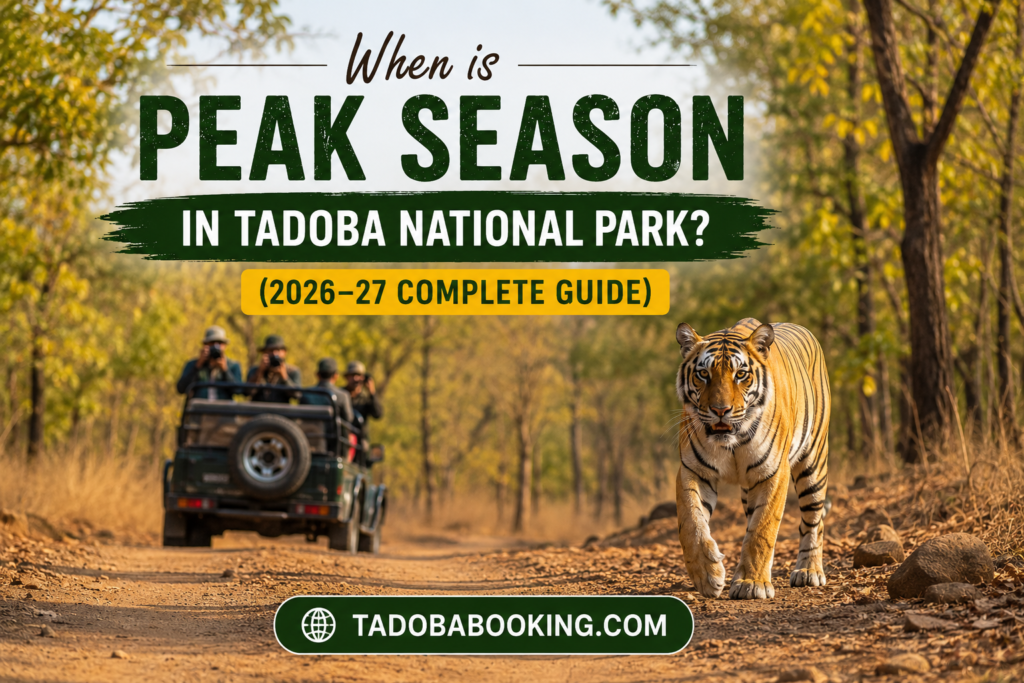
If you are planning a Tadoba jungle safari to one of India’s most exciting tiger reserves in Maharashtra, you’ve probably already wondered the same thing—when exactly is the peak season in Tadoba National Park? It’s a fair question, and to be honest the answer does depend a little on what you are looking for. Whether your idea is to get a Royal Bengal Tiger up close, catch a relaxed morning jeep safari, or just melt away into nature for a while, each season in Tadoba Andhari Tiger Reserve brings along something different and oddly charming. In this guide, we break it all down — season by season, zone by zone.
Understanding Tadoba’s Safari Season
Tadoba Andhari Tiger Reserve, located in the Chandrapur district of Maharashtra, is open for safari from October 15 to June 30 each year. During the monsoon months — July to mid-October — the park stays closed to let the forest breathe and recover. This means visitors have roughly eight months to plan their trip.
During the monsoon, the forest department uses this closed period to let the jungle recover and repair safari tracks. One important thing to keep in mind Tadoba National Park remains closed every Tuesday for all tourist safaris without exception. If your travel dates fall on a Tuesday, plan accordingly and adjust your itinerary a day before or after.
So, What Is the Actual Peak Season?
There are two phases that most visitors and wildlife lovers consider “peak”:
1. Winter Season (November to February) — Best Time for Families and Birdwatching
Winter is the most comfortable time to plan a trip to Tadoba. The temperature ranges between 20°C and 30°C, making both morning and evening safaris enjoyable without getting exhausted due to the heat.
This is the time when families , first time visitors, and birdwatchers kinda lean in to visit. The forest is still lush and green from the monsoon so it looks really beautiful, visually speaking. Winters are also a nice season for birdwatching and for catching sight of animals like Sambar deer, sloth bears, Indian bison, wild boars, and leopards.
However, because the weather is so pleasant, this season draws a large number of tourists.
2. Summer Season (March to June) — Peak for Tiger Sightings
If your real mission is to see a tiger , then summer is hands down your best bet, honestly. March to May is the best stretch to visit Tadoba National Park for those tiger sightings. Because the dry forest holds up better light and clear sight lines, you tend to notice them sooner, and tigers usually move closer to water sources. Along with that there’s a pretty solid chance of spotting leopards, sloth bears, and also wild dogs, like in the same rounds.
As summer temperatures soar to 45°C, waterholes across the reserve begin to shrink. This forces tigers to become highly predictable in their movement — they cluster around Tadoba Lake, Moharli Lake, and other key water sources, often visiting multiple times throughout the day. Sparse vegetation means nothing obstructs your line of sight.
Wildlife photographers specifically plan their Tadoba trips during April and May for this reason. Yes, it is hot — uncomfortably hot at times but the tiger sighting opportunities are simply unmatched anywhere in Maharashtra. You can plan your safari either early in the morning or in the evening to avoid the worst of the afternoon heat. If you are planning a summer visit, make sure to complete your gypsy safari booking in Tadoba at least 60 days in advance — core zone slots fill up extremely fast during this season.
Post-Monsoon Season (October to November) — The Hidden Gem
Not enough people talk about this window. Right after the park reopens in October, everything looks fresh and alive,like it has just woken up. The post monsoon season is also a pretty nice time to visit Tadoba National Park , with a lush green jungle and flowers blooming all over the place. Safari permits are comparatively easier too to arrange during this shoulder phase than in the bustling winter holiday months.
Which Zone Should You Choose?
Tadoba has multiple safari zones — both core zones and buffer zones. The core zones, like Moharli and Kolara, offer the highest probability of tiger sightings but fill up fast. It is recommended to book at least 60 to 90 days in advance for core zones, especially during peak season. Bookings open 120 days before the date of entry.
If core zone permits are unavailable, buffer zones such as Navegaon, Pangdi, Agarzari, and Ramdegi are excellent alternatives. These zones allow controlled tourist access while still offering strong chances of tiger and leopard sightings, along with diverse birdlife and beautiful forest landscapes.
Want to see how each month compares in terms of tiger sightings, crowd levels, and safari availability? Check out our Peak vs Off-Season in Tadoba: Data-Driven Insights for Serious Travelers — built around real travel data.
Safari Booking Tips for Peak Season
Getting a safari permit during peak time at Tadoba is not as simple as showing up. Here is what you should know:
- Book early. During peak season, safari permits get booked quickly. It is recommended to book your safari two to three months in advance.
- Always carry the same ID proof you used during your online booking. If the ID you show at the gate is different from what was used during booking, they may not allow entry.
- Securing a safari in the core zone during peak or holiday season is nearly impossible unless you book at least three weeks in advance.
- Morning safaris are generally better than evening ones during summer, as the light is softer and animals are more active near waterholes at dawn.
For peak-season weekends between November and May, always book on the very first day the 120-day advance window opens — at exactly 8 AM IST. Safari permits for popular zones sell out within hours of opening.
Month-by-Month Quick Reference
- October – November: Post-monsoon, fresh forests, comfortable weather, good for general wildlife
- December – February: Cool and pleasant, great for families and birdwatching, high crowd during holidays
- March – May: Best tiger sighting season, hot but rewarding, very high booking demand
- June: Last chance before monsoon closure, tiger sightings still active near waterholes, book at least 3 to 4 weeks in advance
- July – September: Park closed (monsoon)
FAQs
There are two peak periods. November to February for comfortable weather and high tourist footfall, and March to May for the best tiger sightings.
April and May are considered the best months. Tigers gather near waterholes, making sightings frequent and close.
No. The park remains closed from July to mid-October during the monsoon season.
Book at least 60 to 90 days in advance for core zones. Slots open 120 days before the safari date.
Yes, winter (November to February) is great for comfortable safaris, birdwatching, and spotting various wildlife species.
It is risky during peak season. Buffer zones may have some availability, but core zones are usually fully booked.
Absolutely. Tadoba has a high tiger density and good forest roads, making it beginner-friendly.
Morning safaris usually start around 5:30 AM. Reaching the gate on time is essential, as late entry is typically not allowed.
Conclusion
Tadoba National Park is not really that simple, it does not have only one peak season— it has two, and well each one feels different. For something more easy going and kind of pleasant with decent wildlife variety, you should plan around November through February. On the other hand, if you are truly focused on tiger sightings and you do not mind the heat then March to May is where the whole thing gets better, like, the magic happens. Still, no matter what you choose, booking early is basically non-negotiable, especially for the core zones.