
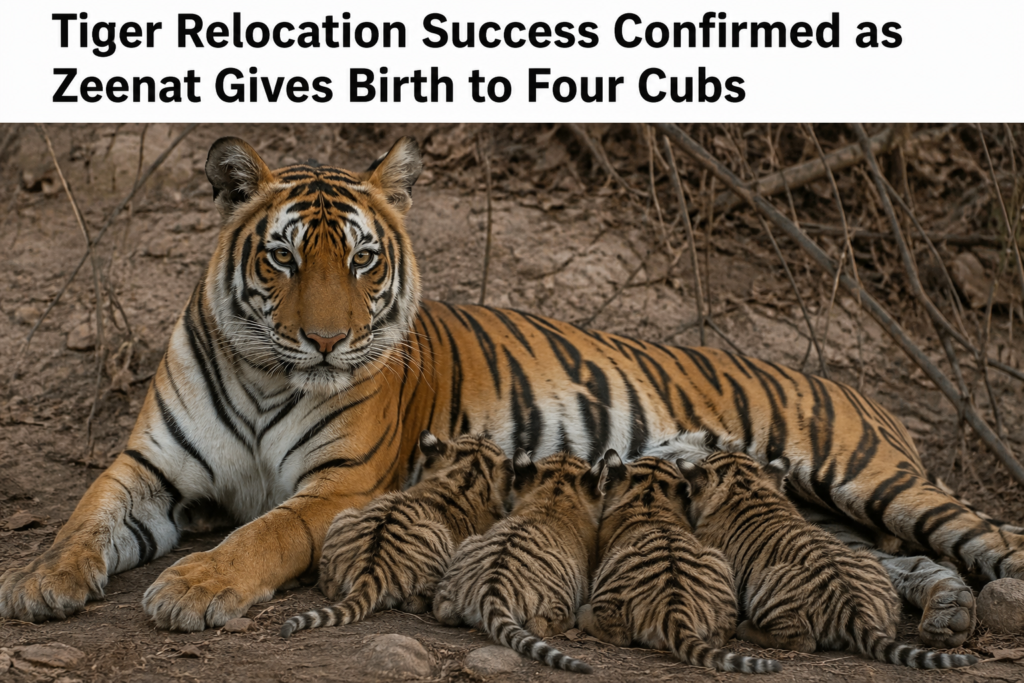
Bhubaneswar: The inter-state tiger translocation programme has achieved a significant milestone with Zeenat, a 4.5-year-old Royal Bengal tigress relocated from Tadoba-Andhari Tiger Reserve in Maharashtra, giving birth to four cubs in Similipal Tiger Reserve.
In 2024, Zeenat was brought to Similipal as part of a conservation initiative aimed at strengthening the genetic diversity of its tigers. Similipal, known for its rare melanistic tigers, needed a fresh genetic line, and the birth of the cubs marks the successful achievement of the project’s primary objective.
Forest Minister Ganesh Ram Singhkhuntia described the development as a major boost for tiger conservation in Similipal. He said the tigress had initially dispersed after her relocation but later settled within the reserve and successfully reproduced. According to him, the cubs represent the foundation of a new genetic pool that could strengthen the future of big cat conservation in the region. He added that ensuring the survival of the cubs will now be the top priority.
Officials confirmed the birth after reviewing camera trap images that showed Zeenat moving her cubs from one location to another. The footage provided the first clear evidence that the tigress had successfully delivered four cubs in the reserve.
Celebrating the achievement, Odisha Chief Minister Mohan Charan Majhi stated on X that the forest department has implemented special measures to safeguard both the mother and her cubs. He noted that their movements are being continuously monitored to ensure their safety.
Wildlife authorities adopted a highly cautious approach while monitoring Zeenat, keeping in mind the unsuccessful tiger translocation attempt at Satkosia in 2018 involving tigress Sundari and tiger MB2 from Madhya Pradesh. To avoid similar challenges, officials closely tracked Zeenat through a satellite collar, very high frequency (VHF) signals, and extensive camera trap surveillance.
Chief Wildlife Warden Prem Kumar Jha said forest teams had observed through radio collar data that Zeenat had restricted her movements to a small area for some time. While officials were initially uncertain about the reason, the behaviour hinted at a possible development. Based on the estimated size of the cubs, authorities believe they are around three weeks old, indicating that the tigress likely conceived in January.
Jha said the successful translocation and birth of the cubs demonstrate the effectiveness of careful planning, teamwork, and long-term conservation efforts. He noted that the project’s goal of increasing the genetic diversity of Similipal’s tiger population has been achieved through the birth of the offspring. The cubs, born from a Tadoba-origin female and a Similipal male, are expected to contribute significantly to the genetic strength and long-term sustainability of the reserve’s tiger population.
Former Principal Chief Conservator of Forests (Wildlife) Susanta Nanda called the event a landmark moment in India’s wildlife conservation journey. He said the birth of Zeenat’s cubs is much more than an increase in tiger numbers. According to him, it represents the successful outcome of one of the country’s most ambitious and closely monitored conservation initiatives aimed at preventing genetic isolation and securing the future of Similipal’s tiger landscape.