
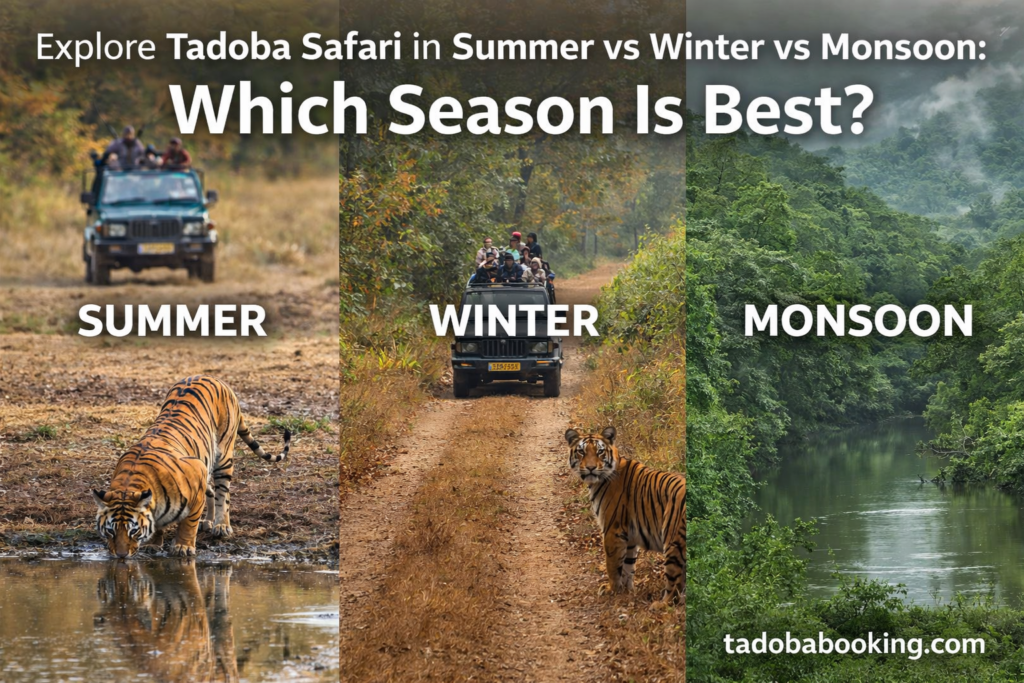
Planning a trip to Tadoba National Park but unsure which season to choose? You’re not alone. One of the most important questions travelers ask is which season summer, winter, or monsoon provide the best safari experience.
The truth is that every season has something unique to offer. Your Best time to visit Tadoba depends on what you hope to see and experience. Some visitors dream of spotting a tiger just a few meters away, while others seek lush green landscapes, colourful birds, or pleasant weather for extended jungle drives.
In this guide, we’ll compare all three seasons so you can decide when to plan your Tadoba Safari adventure.
About Tadoba National Park
Located in Maharashtra’s Chandrapur district, Tadoba National Park is one of India’s premier tiger reserves. It is famous for its healthy tiger population, diverse wildlife, and beautiful forests made up of teak, bamboo, and mixed deciduous trees.
Besides tigers, the park is home to leopards, sloth bears, wild dogs, gaur, sambar deer, spotted deer, nilgai, crocodiles, and more than 280 bird species. Every safari offers a different experience, making Tadoba Safari destination worth visiting throughout the year.
Summer in Tadoba (March to June)
Summer gives visitors some of the strongest chances of seeing tigers during a safari.
•As temperatures climb, water becomes scarce in the forest. Tigers and other wildlife visit lakes, streams, and waterholes more frequently, giving safari visitors excellent chances to see them in the open.
Although daytime temperatures often range between 35°C and 45°C, early morning safaris remain comfortable enough for most visitors.
Why Visit in Summer?
* Highest chance of tiger sightings
* Excellent wildlife photography opportunities
* Animals gather around water sources
* Better visibility due to thinner vegetation
Things to Keep in Mind
The heat can be intense, especially during afternoon safaris. Wear light cotton clothing, carry plenty of water, apply sunscreen, and use a hat or cap for protection.
Best for: Wildlife lovers, photographers, and anyone hoping to maximize their chances of seeing a tiger.
Winter in Tadoba (October to February)
Winter provide the most pleasant conditions for exploring Tadoba safari. Winter is the most comfortable season for exploring Tadoba safari. With crisp mornings and mild afternoons, safari drives feel relaxed and enjoyable for families, couples, and first-time visitors alike.
Temperatures usually range between 10°C and 28°C. The forest remains green after the monsoon, creating beautiful scenery and excellent conditions for birdwatching.
While tiger sightings are still common, the dense vegetation can occasionally make them slightly more challenging than during summer.
Why Visit in Winter?
* Pleasant weather throughout the day
* Beautiful landscapes
* Great season for birdwatching
* Ideal for families and senior travelers
Things to Keep in Mind
Morning safaris can be chilly, so carrying a light jacket is recommended.
Best for: Families, nature lovers, birdwatchers, and travelers who prefer comfortable weather.
Monsoon in Tadoba (July to September)
The monsoon gives Tadoba Safari a completely different feel, turning the forest into a rich stretch of green. Fresh rain breathes new life into the landscape, streams swell, and everything looks brighter and more alive.
That said, many of the core safari zones usually stay closed during this season because of muddy roads and conservation rules. Depending on weather conditions and forest department updates, a few buffer zones may still remain open.
Although tiger sightings become less predictable, the season offers a peaceful experience with fewer tourists and stunning scenery.
Why Visit During the Monsoon?
* Spectacular green forests
* Excellent nature photography
* Fewer crowds
* Fresh and peaceful atmosphere
Things to Know
Always check the latest park opening schedule before planning your trip, as safari availability can vary.
Best for: Nature photographers, repeat visitors, and travelers seeking a quieter wildlife experience.
Comparing Tadoba Safari Across the Three Seasons
| What to Expect | Summer (March–June) | Winter (October–February) | Monsoon (July–September) |
| Weather Conditions | Hot and dry, with temperatures often reaching 45°C | Cool mornings and pleasant afternoons | Fresh, humid, and rainy with lush greenery |
| Tiger Spotting Chances | Highest, as wildlife gathers near water sources | Good, though thicker vegetation can reduce visibility | Lower, with limited safari access |
| Birdwatching Experience | Decent, with many resident birds | Excellent, including migratory bird species | Good, especially for forest birds |
| Photography Opportunities | Ideal for wildlife close-ups and tiger sightings | Great for wildlife and scenic landscapes | Best for vibrant greenery and nature photography |
| Visitor Numbers | High, especially during school holidays | High, as it’s the peak tourist season | Comparatively low, offering a quieter experience |
| Safari Operations | All safari zones generally remain open | Full safari operations across most zones | Core zones are usually closed; selected buffer zones may operate |
Which Season Should You Choose?
The answer depends on your travel goals.
If seeing a tiger is your top priority, summer is your best choice. The dry conditions make wildlife easier to spot around water sources.
If you value pleasant weather and a relaxed safari experience, winter is hard to beat. It’s also the Best season for families and first-time visitors.
If you’re drawn to green landscapes, dramatic skies, and peaceful surroundings, consider visiting during the monsoon—but remember to confirm which safari zones are open before you book.
Tips for Visiting Tadoba Safari
* Book your Tadoba safari in advance, especially during weekends and Long holidays.
* Choose early morning safaris for cooler temperatures and active wildlife.
* Wear earthy-colored clothing that blends into the forest.
* Carry binoculars, a camera, sunscreen, drinking water, and a hat.
* Follow your guide’s instructions and avoid making loud noises during the safari.
* Respect wildlife by maintaining a safe distance and never feeding animals.
Frequently Asked Questions
Summer season offers the highest chances of spotting tigers because animals mostly visit water sources.
Yes. Winter season pleasant weather, beautiful nature view, and excellent wildlife spotting, making it one of the most popular seasons
Many core safari zones are typically closed during the monsoon, while selected buffer zones may remain open depending on weather conditions and forest department guidelines.
Winter is considered the best season for birdwatching thanks to comfortable weather and the arrival of migratory birds.
Final Thoughts
There isn’t a single “best” season for everyone. Summer rewards visitors with outstanding tiger sightings, winter offers the most comfortable safari experience, and the monsoon showcases Tadoba’s forests at their greenest.
Before planning your trip, think about what matters most—wildlife sightings, pleasant weather, photography, or peaceful surroundings. No matter when you visit, Tadoba promises unforgettable moments in one of India’s finest tiger reserves.
If you’re planning your Tadoba safari, book early, pack appropriately for the season, and get ready to experience the incredible wildlife of Tadoba National Park.